These days, speed isn’t the only factor that matters when it comes to providing software. These days, it’s all about being smart and quick. As apps develop more complicated and users desire more, normal DevOps procedures aren’t enough on their own. This is where AI-powered release pipelines and DevOps automation are changing the way that modern engineering teams create, test, and share software.
Companies that used to need people to approve things, set CI/CD rules, and watch things reactively are now moving toward smart release pipelines that learn, improve, and become better all the time. This blog will talk about how DevOps automation makes AI-powered releases possible, why this is important, and how businesses can use this technique to make sure their deliveries are dependable and can grow.
How to Understand DevOps Automation in Today’s World
Using tools, scripts, and processes, DevOps gets rid of repetitive manual chores across the software development lifecycle. This includes automatically putting together code, testing it, setting up infrastructure, checking security, keeping an eye on things, and deploying.
In the past, automation was mostly about making things go faster. But now, machines are starting to understand choices. Artificial intelligence has transformed DevOps so that it doesn’t just follow instructions anymore. It looks at data, makes a bet about what will happen, and then either suggests something to do or does it right away.
This upgrade is needed because modern release processes do the following:
– Hundreds of small services
– A lot of cloud storage
– There are always updates to features.
– Expectations for safety and high availability
It costs a lot of money and is risky to deal with this much complexity without good automation.
The Future of AI-Powered Release Pipelines
AI-driven release pipelines leverage machine learning and analytics to improve CI/CD operations. Pipelines don’t have clear rules; instead, they change based on past data, how well they work, and indicators of risk. For instance:
– AI in CI/CD can discover flaky tests and cut down on false failures.
– Think about the risks of getting the product out there before you do it.
– Improve the time it takes to run a pipeline on its own
– Begin rollbacks with finding anomalies.
– Give advice on the optimal time to install based on how people use it.
This is why releases don’t just get faster; they also get smarter.
How DevOps Automation Improves Smart Release Pipelines
Smart release pipelines are only possible because of DevOps automation. As AI insights can’t be done right without automation. And this is how AI and automation work together all the way through the process:
Testing and integrating code automatically. Automated builds and tests run every time code is committed. AI looks at test data, finds patterns, and warns you of changes that could be very bad. This keeps teams from having to go through every alert by hand, which helps them stay focused on what’s important.
Making smart choices about deployment
AI doesn’t just deploy without thinking; it looks at how healthy the system is, how traffic is changing, and data from past releases. When used with DevOps, the pipeline can choose to move forward, stop, or roll back a release.
Constant feedback and monitoring
When automation programs are used, they gather logs, metrics, and traces. AI systems use this data to find problems before they get worse. Automated workflows for correcting problems start right away if there are any. This closed feedback loop is what makes release pipelines smart.
The main benefits of automating DevOps for AI-driven releases
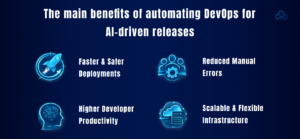
1. Deployments that are quicker and safer
Automation cuts down the time people have to wait for approvals and the same checks to be done over and over again. AI also lowers risk by finding problems early on. They work together to provide you speed without making things less stable.
2. Less likely to make a mistake by hand
It’s easy to make mistakes when you do things by hand while you’re stressed. DevOps makes sure that things are always the same, while AI uses real data to check decisions instead of guesswork.
3. More productive developers
Developers have more time to add new features and less time correcting problems with the pipeline. Smart release pipelines take care of daily responsibilities so that teams may focus on coming up with new ideas.
4. More freedom in other places
Automation makes it easy to make sure that everything works the same way, whether you use several clouds or a mix of clouds and on-premises servers. AI also helps with how to use and deploy resources on a large scale.
AI-powered automation tools for DevOps that run pipelines
A lot of new DevOps automation tools have AI features or can integrate with AI solutions. These technologies help teams build intelligent release pipelines that are both smart and dependable.
Some common types are CI/CD platforms that use AI to give you insights.
– Tools for setting up and managing infrastructure automatically
– Platforms for monitoring and observability that can find strange activity
– Tools that use AI to find security threats on their own
– Cloud orchestration tools that let you quickly adjust the size of your cloud
The best DevOps tools for you will depend on your company’s size, structure, and goals.
AI in CI CD: Main Uses
AI in CI CD isn’t just a fad. It has an influence in the real world that can be assessed.
Some good examples are:
– Finding tests that aren’t necessary or aren’t very useful is what test optimization is all about.
– Making guesses about failure based on changes to code and how they influence other code
– Using information from past releases to figure out how risky it is to deploy
– Intelligent release pipelines and slow rollouts
– Finding the core cause of accidents automatically after they happen
Using these use cases with DevOps makes it much easier to trust that a release will go well.
What Managed Services and Consulting for DevOps Can Do
It can be hard for companies that are growing to switch to AI-driven DevOps. Managed cloud services and DevOps consulting and managed cloud services are quite important at this point.
Experienced suppliers can help with: Making smart CI/CD systems
1. Choosing and putting together DevOps tools
2. Using AI models to improve the performance of pipelines
3. Taking care of cloud infrastructure safely and well
4. Always making intelligent release pipelines better
A lot of businesses also use DevOps managed services to run their everyday operations, keep an eye on things, and make them better. This lets professionals take care of the pipeline while teams inside the company focus on the main product.
Problems in using AI to automate DevOps
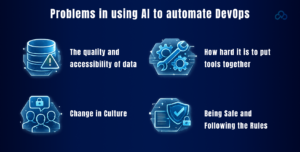
Even while the benefits are clear, businesses should be mindful of common problems.
1. The quality and accessibility of data
AI models use a lot of data from the past. Data that is missing or has a lot of noise might make things less precise and useful.
2. How hard it is to put tools together
It takes a lot of thought and experience to use different automation and AI technologies together in different situations.
3. Change in Culture
Teams need to be able to trust the choices made by AI and automation. Most of the time, this means changing the way you think and handling the change well.
4. Being Safe and Following the Rules
Automated pipelines must follow strong security and compliance rules, especially in businesses that are heavily regulated.
Taking care of these problems ahead of time makes the transfer go more smoothly.
The best ways to construct smart release pipelines
If you want to get the most out of DevOps automation and AI-driven pipelines, remember these best practices:
– Start by learning a lot about automation.
– Before you employ AI, make sure that everyone’s CI/CD processes are the same.
– First, look at the use cases that will have the most effect.
– Give AI models new data to work with all the time.
– Check automated decisions on a regular basis and analyze them
Use managed cloud services and DevOps consulting and managed cloud services that have been around for a while. These strategies help businesses do well in a way that lasts and can develop.
DevOps automation has a bright future
DevOps automation is changing from doing things to helping people decide what to do. Adding AI to release pipelines makes them robust, flexible, and able to predict what will happen.
Companies that put money into smart release pipelines now will have products that are more reliable, get to market faster, and make customers happier in the future. With the correct plan, tools, and guidance from experts through devops managed services, AI-driven DevOps is no longer an option. It’s vital for business.
FAQs
1. What does DevOps automation mean in AI-driven release pipelines?
Automating tasks like testing, deployment, and monitoring in the CI/CD process is part of DevOps. When used with AI, it lets release pipelines make smart decisions.
2. How does AI in CI/CD make it easier to deliver software?
AI in CI/CD takes data from the pipeline to find defects, make tests better, figure out deployment risks, and initiate activities automatically. This makes releases faster and safer.
3. Do AI-powered pipelines need DevOps automation tools?
Yes. DevOps automation technologies provide the execution layer that makes it possible to use AI discoveries reliably and on a large scale.
4. Why should companies think about using managed services for devops?
With DevOps managed services, businesses can use AI-driven DevOps without making things tougher. They get professional advice, ongoing optimization, and operational support.
5. Is DevOps useful for small and medium-sized businesses?
Of course. Cloud-based technologies and managed services make it possible for even small teams to set up smart release pipelines and use AI-driven DevOps processes.
Do you like to read more educational content? Read our blogs at Cloudastra Technologies or contact us for business enquiry at Cloudastra Contact Us.