A pump trips at 2:13 a.m.
The operator sees an alarm on SCADA, checks a binder for the last maintenance date, then calls a technician who has a different version of the asset list on his phone. By morning, the lab results arrive- too late to explain why effluent quality drifted overnight. Everyone did their job. The system still failed the people relying on it.
This is the quiet reality behind many “smart” water projects. You can install sensors, dashboards, and fancy analytics, but if the data stays locked in separate tools and teams, progress stalls.
That’s why digital water isn’t just about adding technology. It’s about connecting the right information so decisions become faster, calmer, and more accurate-especially when things don’t go as planned.
Let’s unpack how data integration removes silos, supports better operations, and turns smart infrastructure into something you can actually trust.
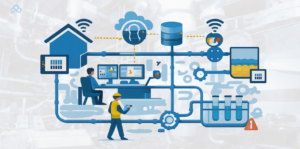
What “digital water” really means (and what it doesn’t)
When people hear digital water, they often picture IoT meters, leak detection, or AI predicting failures. Those are useful-but they’re not the starting point.
Digital water is a way of running water and wastewater systems where data flows smoothly from field to decision, without constant manual copying, guessing, or delays.
In practical terms, a strong digital water setup means:
– Operators see process data and relevant maintenance history in one view.
– Engineers can compare design assumptions against real performance.
– Teams share a common “truth” about assets, zones, and KPIs.
If your plant needs three logins and five spreadsheets to answer a simple question, you don’t have a digital water system. You have digital islands.
The real enemy: silos that hide context
Silos form naturally in water utilities and treatment facilities because each team solves a different problem with a different tool. Over time, the stack becomes a patchwork.
Here’s what “silos” usually look like in the field:
1. SCADA/PLC data is live, but lacks lab confirmation and asset context.
2. LIMS/lab data is accurate, but delayed and hard to correlate with events.
3. GIS knows where assets are, but not how they’re performing right now.
4. CMMS/EAM tracks work orders, but doesn’t always reflect real-time condition.
5. Customer and metering systems tell demand stories that never reach operations.
And then there’s the human layer: teams using different naming conventions (“Pump Station 3” vs “PS-03”), different units, and different versions of the same truth.
This is where digital water transformation often gets stuck. Not because people don’t care-but because the system makes it hard to connect cause and effect.
Data integration is the foundation of digital water transformation
Before predictive analytics, before digital twins, before automation-you need your data to meet each other.
Data integration is how you connect sources, align definitions, and create a reliable flow of information across the organization. It’s the hidden engine behind digital water.
Start with decisions, not tools
A common mistake is shopping for platforms before defining what should improve.
Instead, begin with questions like:
– “What causes our peak turbidity events?”
– “Which assets drive most downtime?”
– “How do influent changes affect chemical dosing and energy use?”
– “Where are we losing water-and why does the same zone keep returning?”
When you define decisions first, integration becomes focused. You don’t integrate everything. You integrate what matters.
Build a shared language for water data
This sounds boring, but it’s where real progress happens.
A shared model answers basics consistently:
– What is an “asset”?
– How do we identify it across GIS, CMMS, and SCADA?
– What timestamp is the source of truth?
– Which units, naming rules, and quality checks apply?
That shared language reduces confusion and makes automation possible. It also keeps your digital water initiative from turning into “dashboard theater.”
Research to practice water treatment: why integration closes the gap
There’s a phrase that shows up in many technical conversations: Research to practice water treatment. It’s the idea that good research shouldn’t stay in papers or pilot skids-it should reach daily operations.
But translating research into reality is hard when data is scattered.
A process improvement might look promising in a controlled trial, yet fail at scale because the facility can’t reliably track:
– influent variability
– seasonal patterns
– upstream industrial discharge
– equipment condition
– lab-confirmed outcomes
When all those signals live separately, you can’t validate learning. You can’t repeat success. You can’t explain failures.
This is where digital water transformation becomes deeply practical. Integrated data lets teams test improvements in the real world, prove impact, and refine faster-without relying on gut feel.
Example 1: A wastewater plant that stopped “chasing yesterday”
A mid-sized facility handling water treatment wastewater struggled with sudden ammonia spikes. Operators would respond with dosing tweaks, but the pattern kept returning.
The breakthrough wasn’t a new sensor. It was integration.
They connected:
– online ammonia and DO readings from SCADA
– lab ammonia confirmations from LIMS
– rainfall and inflow data
– aeration blower runtime and maintenance events from CMMS
Once the signals sat on one timeline, a clear pattern emerged: spikes followed high inflow events and occurred more often after a specific blower showed efficiency drift.
The plant didn’t just react faster. They prevented repeat events by aligning maintenance with process performance. That’s digital water in action-less drama, more control.
Treatment system design gets smarter when operational data is connected
Good treatment system design depends on assumptions: peak flows, influent quality, temperature ranges, energy costs, and equipment behavior. But many design decisions still rely on snapshots and conservative safety margins because real data is hard to access.
When integration is done right, design becomes grounded in reality:
– Engineers can see multi-year patterns, not single-month averages.
– Designers can compare performance across similar assets and sites.
– Capital planning becomes evidence-based, not political.
This is where water treatment engineering meets modern operations. A connected dataset turns every plant day into design feedback.
Digital water and the “design–operate loop”
A strong digital water approach creates a loop:
1. Design assumptions are recorded clearly.
2. Operations generate real performance data.
3. Teams compare and refine designs based on outcomes.
Over time, you stop repeating the same oversizing, the same underestimations, and the same “we didn’t see that coming” surprises.
Example 2: A small utility avoided an expensive upgrade
A smaller utility planned to expand filtration capacity due to rising demand. The initial proposal leaned toward a costly upgrade.
Instead, they integrated:
– customer meter demand trends
– pressure zone behavior from telemetry
– pump efficiency curves and runtime
– backwash frequency and turbidity history
They found the issue wasn’t just demand growth. It was uneven zone distribution and inefficient pump scheduling that created artificial peaks.
By adjusting operations and fixing a few bottlenecks, they delayed the major expansion and improved service reliability. The best part? The solution wasn’t “more tech.” It was digital water transformation focused on data clarity.
A practical roadmap to overcome silos (without boiling the ocean)
If you’re starting from scratch, don’t aim for a perfect end-state. Aim for momentum.
Here’s a simple, field-tested sequence:
1) Pick 2–3 high-value outcomes
Leak reduction, energy optimization, compliance stability, fewer unplanned outages-choose what matters most.
2) Identify the “minimum data set” for those outcomes
Not all data. Just what explains cause and effect.
3) Integrate in layers
Start with read-only connections and a unified timeline. Then move toward workflows and automation.
4) Add data quality rules early
Bad tags and inconsistent naming can sink everything quietly.
5) Make it usable for the people doing the work
If operators and technicians don’t trust it, it won’t live.
This is how digital water stays real: small wins, clear value, steady expansion.
Common traps that slow down digital water transformation
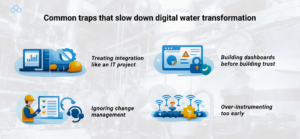
Even smart teams hit these. Knowing them early saves months.
Treating integration like an IT project
Integration is operational work. IT enables it, but operations must shape it.
Building dashboards before building trust
If the first outputs are confusing or inconsistent, people tune out quickly.
Ignoring change management
A tool doesn’t replace habits. Training, feedback loops, and quick support matter.
Over-instrumenting too early
More sensors won’t fix missing context. Integration comes first.
When you avoid these traps, digital water transformation stops feeling like a “program” and starts feeling like a better way to run the system.
Conclusion: digital water starts where silos end
Smart infrastructure isn’t held back by a lack of technology. It’s held back by disconnected information.
When SCADA, GIS, CMMS, lab results, and customer signals finally talk to each other, something changes:
people stop chasing symptoms and start understanding systems.
That’s the real promise of digital water-not flashy dashboards, but steady confidence. Better treatment outcomes. Smarter treatment system design. Stronger water treatment engineering decisions. More resilient water treatment wastewater operations.
If you’re thinking about your next step, start simple: choose one painful problem, map the data it needs, and integrate just enough to make tomorrow easier than today. That’s how digital water transformation becomes real.
FAQs
1) What is digital water in simple terms?
Digital water is using connected data-from operations, lab, assets, and networks-to run water systems with clearer insights and faster decisions.
2) Why do silos happen so often in water utilities?
Different teams adopt different tools over time (SCADA, GIS, CMMS, LIMS). Without a shared data model, those systems don’t naturally connect.
3) Do we need AI to start digital water transformation?
No. Start with data integration and consistency. AI helps later, but only when your data is reliable and connected.
4) How does integration help treatment system design?
It lets designers use real operational patterns (flows, quality, energy, failures) instead of assumptions, leading to more accurate and cost-effective designs.
Do you like to read more educational content? Read our blogs at Cloudastra Technologies or contact us for business enquiry at Cloudastra Contact Us.