The Internet of Things is more than just linking up devices. The idea these days is to make things smart, responsive, and capable of performing tasks independently. Cloud computing and edge AI collaborate to transform the way IoT systems operate. It’s not as useful to send everything to centralised cloud servers as it used to be. Businesses collect a lot of real-time data from smart devices, cameras, and sensors. Latency, high bandwidth costs, and worries about data privacy all point to the need for a better way to do things. These problems are being solved on a vast scale by edge AI systems and contemporary cloud computing technology.
We’ll talk about how Cloud Computing Edge AI works with IoT systems in this blog. We’ll also speak about why it’s important and how businesses may use it to their advantage.
What Edge AI and Cloud Computing Mean for the Internet of Things
You don’t need to own any physical infrastructure to use the cloud. You can get storage, processing power, and analytics whenever you want. Businesses of all sizes may be able to grow, change, and save money with cloud platforms. Edge AI, on the other hand, comprises using AI models directly on edge devices, including sensors, cameras, gateways, and embedded systems. Edge devices don’t send raw data to the cloud because they look at it quickly and on the spot.
Cloud computing technology and Edge AI work together to make smart IoT ecosystems right where the data comes from. The cloud can still control everything from one place, though.
Edge intelligence works quickly and reliably, even when loud machines are doing big backups and analytics.
Why Edge AI Implementations Matter for IoT Platforms
Cloud servers are very important for traditional IoT devices to be able to access the data they gather. But this plan has a number of problems. Latency could be a big problem at first. Smart traffic systems, industrial automation, and healthcare monitoring are some examples of applications that can’t even consider delays.
Second, sending data all the time uses a lot of bandwidth, which costs extra.
Third, sending sensitive data to servers outside of your network is dangerous since it could lead to legal and security issues.
This is why edge AI is so important. IoT solutions can respond in milliseconds because they process data right on the device. This implies they don’t need the network as much and can keep data safe.
Cloud computing technology is still incredibly helpful since it lets you learn in one place, store things for a long time, and keep everything organised on all of your devices.
How Edge AI and Cloud Computing Can Help Each Other
Edge AI and cloud computing are not two technologies that are trying to be better than each other. They work together instead.
This is how a regular building works:
1. Edge devices get data from the outside world in its natural form.
2. AI models that run on edge devices process data right away.
3. The cloud only gets useful or strange things.
Important Ways to Combine Edge AI and IoT
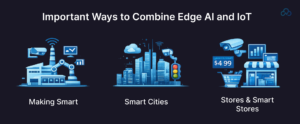
1. Making Smart
In factories, cameras and sensors watch over machines and production lines. Edge AI finds faults, guesses when machines might break down, and makes sure that quality control happens right away.
You can use cloud computing to do predictive analytics, look at old data, and make factories operate better together.
2. Smart cities
Traffic lights, security cameras, and environmental sensors all collect a lot of data. Edge AI implementations look at this data on-site to keep people safer, watch traffic, and find incidents. Local authorities can notice patterns and conceive of techniques to improve the infrastructure better with the help of cloud platforms.
3. Stores and Smart Stores
to allow you to watch how customers act in real-time edge AI implementations, maintain a track of how much stock you have and make innovative suggestions. Cloud computing service providers enable companies to get the information they need for sales predictions and business intelligence dashboards.
How Cloud Computing Makes Edge AI Bigger
Edge devices can’t do everything by themselves. Cloud computing technology lets edge AI systems grow and stay up to date.
Here are some important things to know about the cloud:
– Putting a lot of data in one area to teach models
– Watching over and taking care of the equipment safely
– Over-the-air updates for AI models
– Connecting to business systems
The Benefits of Using Hybrid Cloud for IoT and Edge AI Platforms
One of the best things about using both cloud and edge AI implementations is that hybrid systems are easy to adapt. Some of the good things about hybrid cloud benefits are:
– Better performance because processing happens on-site
– To save money in the cloud, get rid of anything you don’t need.
– It’s safer to keep essential information on-site.
– It is always there, even when the network is down.
– Growth that happens smoothly in all areas
With this method, companies may use smart systems without having to cling to one type of infrastructure.
Hybrid architectures make sure that everything functions smoothly, whether the data is processed on the edge, in private settings, or on public cloud platforms.
Issues with using Edge AI
Using edge AI implementations has both pros and cons.
Hardware limits can help models be smaller and easier to grasp. People who create AI models need to help them work better on devices that don’t have a lot of power. Another problem that bothers me is safety. People commonly employ edge devices in regions that are far away or not particularly safe, which makes it easy for hackers to get to them.
It’s difficult to integrate when you have to handle both cloud and edge systems.
But cloud computing service providers today have features that make it easy to set up, keep an eye on security, and keep an eye on how long things last.
The Future of Cloud Computing and Edge AI in the IoT
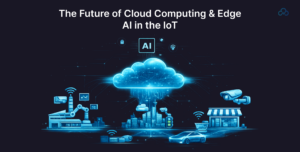
Edge intelligence will get better as AI models and technology get smarter. Cloud platforms will keep becoming better, which will make it easier to automate, orchestrate, and analyse systems that are spread out. In the future, IoT systems will be able to work together, learn all the time, and change to fit new situations with little help from people.
The next generation of smart systems will depend on how successfully edge AI and cloud computing technology operate together.
FAQs
1. How can IoT platforms leverage edge AI?
You can employ AI models right now on IoT devices or gateways of edge AI implementations. This implies they can make choices and handle information in real time without having to connect to the cloud all the time.
2. How does cloud computing help Edge AI?
Cloud computing technology improves edge AI implementations by letting you do all of these things in one place: train models, control devices, store data, and run analytics. It also sends data to edge devices.
3. What are the key advantages of using a hybrid cloud for IoT?
Hybrid cloud benefits are, such as less latency, lower bandwidth costs, better security, more scalability, and the ability to keep working even if the network goes down.
4. Do companies that offer cloud computing services need Edge AI services?
Yes, cloud computing service providers have particular platforms, security tools, and administrative services that make it easier to set up and grow Edge AI on IoT systems.
5. Is Edge AI superior to AI that runs in the cloud for the Internet of Things (IoT)?
Edge AI doesn’t take the place of cloud-based AI; it works with it. They work together to make IoT networks better, save money, and do things on their own in a smart way.
Do you like to read more educational content? Read our blogs at Cloudastra Technologies or contact us for business enquiry at Cloudastra Contact Us.