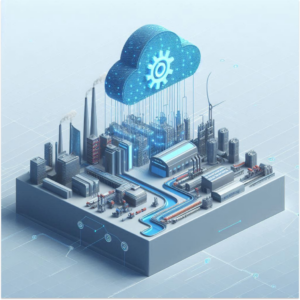
Edge cloud computing represents a transformative approach in how data is processed, analyzed, and utilized in manufacturing environments, especially in the UAE. By bringing computation closer to the data source—like sensors and machines—edge cloud computing minimizes latency, boosts real-time data processing capabilities, and reduces bandwidth usage. This is crucial in intelligent manufacturing, where quick decision-making is essential for operational efficiency and responsiveness to market demands.
In the Manufacturing Internet of Things (MIoT), edge cloud computing supports applications like predictive maintenance and real-time monitoring of manufacturing processes. This section explores the architecture of edge cloud-enabled intelligent manufacturing factories, highlighting its components, functionalities, and benefits for modern manufacturing.
Architecture Overview of Edge Cloud in Intelligent Manufacturing Systems
The architecture of an edge cloud-enabled intelligent manufacturing factory can be divided into four main domains: the device domain, network domain, data domain, and application domain. Each domain plays a vital role in ensuring smooth integration and operation of edge cloud technologies within the manufacturing environment.
1. Device Domain
This domain includes all the physical devices and sensors located on the factory floor. It encompasses various equipment, such as robots, meters, and machine tools, which are equipped with computing capabilities to process data locally. The device domain must support flexible communication infrastructures and standardized protocols, like OLE for Process Control Unified Architecture (OPC UA) and Data Distributed Service (DDS), to enable efficient data exchange and ensure security.
2. Intelligent Manufacturing Network Domain
The network domain connects all field devices to data processing platforms. It utilizes Software Defined Networks (SDNs) to manage data transmission and control, ensuring that time-sensitive data is prioritized and transmitted efficiently. The Time Sensitive Networking (TSN) protocol is often used in this domain to maintain the integrity and timeliness of data communication.
3. Data Domain
This domain is responsible for managing data, including data cleaning, feature extraction, and storage. It enhances the availability of diverse industrial data and allows for the implementation of predefined responses based on real-time data inputs. The data domain ensures that the data sent to the cloud for further analysis is optimized and relevant.
4. Application Domain
The application domain integrates various intelligent applications that utilize the data processed in the previous domains. It allows for the independent implementation of local business logic and supports dynamic management and scheduling of manufacturing resources. This domain is crucial for deploying machine learning models and AI applications that require low-latency responses.
Key Technologies in Edge Cloud for Intelligent Manufacturing
The effective implementation of edge cloud computing in manufacturing relies on several key technologies that enhance its capabilities:
1. Edge Cloud Node Deployment
Deploying edge cloud nodes is critical for ensuring that data processing occurs close to the source. This involves strategically placing edge nodes based on factors like device spatial distribution, function, and computing capacity. Improved algorithms, such as k-means clustering, can optimize the number and location of edge nodes to balance network delay and resource costs.
2. Proactive Caching
Proactive caching techniques store frequently accessed data at the edge, reducing the need for repeated data retrieval from the cloud. This not only speeds up data access but also eases bandwidth constraints, allowing for more efficient data handling in real-time applications.
3. Intelligent Manufacturing: Thing–Edge–Cloud Collaborative Computing
This approach enables seamless collaboration between IoT devices, edge cloud nodes, and cloud resources. By distributing computing tasks across these layers, manufacturers can optimize resource use and enhance processing capabilities, especially for complex tasks that require significant computational power.
4. Resource Scheduling Strategies
Effective resource scheduling is essential for managing the computational load across edge and cloud resources. Hybrid scheduling algorithms that consider factors like latency, energy consumption, and task priority can significantly improve the responsiveness and efficiency of manufacturing operations.
5. Cognitive Capabilities
Integrating cognitive computing capabilities into edge devices allows for advanced data analysis and decision-making. This includes using machine learning algorithms to predict equipment failures, optimize production schedules, and enhance overall operational efficiency.
Benefits of Edge Cloud in Smart Intelligent Manufacturing
Integrating edge cloud computing within intelligent manufacturing environments offers numerous benefits:
- Reduced Latency: By processing data closer to the source, edge cloud computing minimizes the time taken for data to travel to the cloud and back, enabling real-time decision-making.
- Enhanced Data Security: Local data processing reduces the amount of sensitive data transmitted over networks, minimizing exposure to potential cyber threats.
- Improved Bandwidth Utilization: Edge cloud computing reduces the volume of data sent to the cloud by filtering and processing it locally, which is especially beneficial in environments with limited bandwidth.
- Increased Reliability: Local processing capabilities ensure that critical operations can continue even during network disruptions, enhancing the overall reliability of manufacturing systems.
- Scalability: The modular nature of edge cloud computing allows manufacturers to easily scale their operations by adding more edge nodes as needed without overhauling existing infrastructure.
Challenges and Considerations in Intelligent Manufacturing
While the benefits of edge cloud computing are significant, several challenges must be addressed for successful implementation:
1. Integration with Legacy Systems
Many manufacturing environments still rely on legacy systems that may not be compatible with modern edge cloud technologies. Ensuring seamless integration is crucial for maximizing the benefits of edge cloud computing.
2. Data Management
The sheer volume of data generated by IoT devices can overwhelm existing data management systems. Effective strategies for data storage, retrieval, and analysis must be developed to handle this influx.
3. Security Concerns
As with any networked system, edge cloud computing introduces potential security vulnerabilities. You must implement robust security measures to protect sensitive data and ensure the integrity of manufacturing operations.
4. Skill Gaps in Intelligent Manufacturing
Successfully deploying edge cloud technologies requires skilled personnel who understand both the technical aspects of edge cloud computing and the specific needs of the manufacturing environment. Training and development programs may be necessary to bridge this gap.
5. Regulatory Compliance
Manufacturers must navigate various regulatory requirements related to data privacy and security, which can complicate the implementation of edge cloud solutions.
Conclusion
Edge cloud computing is transforming intelligent manufacturing by enabling real-time data processing, improving operational efficiency, and fostering innovation. The architecture of edge cloud-enabled manufacturing factories, with its device, network, data, and application domains, provides a framework for integrating advanced technologies. This integration is crucial for leveraging edge intelligence in customized manufacturing to enhance production processes.
As manufacturers in the UAE embrace Industry 4.0 principles, edge cloud computing and edge intelligence in customized manufacturing will drive the next phase of industrial transformation. By overcoming implementation challenges and harnessing its benefits, organizations can lead the intelligent manufacturing revolution.
At Cloudastra Technologies, we specialize in software services that can help your business leverage edge cloud computing. Visit us for more business inquiries and if you like to read more educational content? Read our blogs at Cloudastra Technologies or contact us for business enquiry at Cloudastra Contact Us.