In today’s digital-first world, businesses are always under pressure to come up with new ideas faster, expand smarter, and make sure their customers have a good experience. But old monolithic systems can slow things down. For this reason, more and more companies are embracing cloud-native application methods to stay ahead of their competitors. But what does it mean to create an app that works on the cloud? And most importantly, how can businesses employ this strategy to be successful in the long run?
Let’s take a closer look at everything.
What does it mean for an app to be cloud native?
A cloud native application is one that was made to work on the cloud. These apps were created for the cloud from the start, not just moved there from other platforms. So, they exploit automation and distributed computing to their greatest potential. In simple terms, a cloud native application is one that is made to grow.
- Made using containers
- It is taken care of via orchestration tools.
- Set up for delivery all the time
This way of thinking about design helps companies come up with new ideas faster and respond quickly to changes in the market.
Why cloud-native design is vital for organizations today
Businesses used to employ monolithic apps. At first, those systems worked effectively, but with time they became more intricate and harder to update. Because of this, even small changes required large deployments. But with cloud-native software, teams can build their own functionality. This means that releases will come more quickly, there will be less risk, and individuals will be able to work together.
Also, firms today have to deal with: Customers want more as they want:
- More and more information
- Rapid changes in technology
- Needs for global scalability
Basic Rules for Making Applications That Work in the Cloud
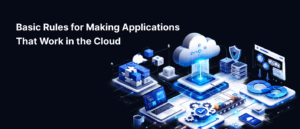
Businesses need to follow some basic rules in order to design a cloud-native software that works.
- Building in pieces
Instead of developing one massive system, apps are broken up into separate services. This strategy lets you be flexible and set things up on your own.
- First, automation
Automation is very important. Everything, from testing to deployment, is done automatically. This means that mistakes happen less often and work gets done more quickly.
- Built-in Strength
Failures are inevitable in distributed systems. A cloud-native program, on the other hand, is made to handle failures well by employing redundancy and fault isolation.
- Delivery and integration all the time
Updates on a regular basis keep apps up to date. This makes CI and CD pipelines very significant parts of the development process.
What is Cloud Native Architecture?
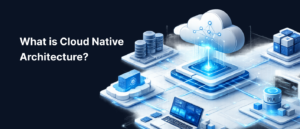
The main change is the use of cloud-native architecture. It supplies the structure that allows for growth and flexibility. A cloud-native application is all about:
- Services that don’t work together
- APIs for communication
- A deployment that uses containers
- Infrastructure that runs by itself
The Basic Idea Behind Microservices Design
Another important part is designing microservices. Instead of having one enormous codebase, applications are made up of smaller, distinct services that may be deployed on their own.
With microservices design, each service has its own database that can be used by itself. As they talk to each other through APIs.
In this approach, teams can work on different things at the same time without bothering each other.
Microservices design also makes it easier to grow. If one feature has to scale, only the service that gets a lot of traffic needs to. This ensures that the costs of infrastructure are kept to a minimum.
But companies need to be very careful when it comes to keeping an eye on, managing, and protecting service communications. Things can grow more complicated if you don’t do this.
Building Cloud Apps That Can Expand
Cloud-native systems may grow, which is one of their best features. But it doesn’t happen by itself. Companies should plan for cloud apps that may grow on purpose.
This is how:
- Services that don’t have a state
When services are stateless, scaling is easier. The data is stored outside, so you can make new instances immediately.
- Load Balance
Traffic should be evenly spread out across instances. This means that performance stays the same.
- Rules for Auto Scaling
Automatic scaling makes sure that programs can accommodate demand as it happens. Companies keep away from both overprovisioning and underutilization.
- Being able to see and watch over
Cloud apps need to be able to see deeply in order to be scaled. Monitoring tools keep a watch on logs, measurements, and traces. Because of this, teams can quickly uncover problems with performance.
Picking the Best Cloud Computing Service Providers
Not all vendors offer the same features. So, it’s very vital to pick cloud computing service providers that you can trust. Businesses should think about the following when they look at cloud computing service providers:
- There is a global infrastructure
- Help with Kubernetes that is managed
- Security certifications
- Ways to cut costs
- Ability to combine
Advantages for Businesses Today
A cloud native application can be quite helpful if it is done correctly.
Faster speed of innovation: Teams operate on their own, so clients get new features faster.
Cost-Effectiveness: Over time, resources get bigger or smaller. So, companies just pay for what they use.
More Dependable: Fault separation keeps service interruptions to a minimum.
Scalability throughout the world: People all over the world can use apps without any hassles.
Developers who get more done: Automation and modular architecture enable developers work on business logic instead of the infrastructure.
Culture resistance: Teams might not want to change. So, leaders need to push people to think in a DevOps style.
Not enough skills: Learning about cloud native application and Kubernetes architecture is really crucial.
More difficult: Distributed systems need strong governance and monitoring systems.
But companies can avoid these issues by making effective plans and employing phased migration strategies.
Final Words
In the end, making cloud-native apps is more than just a technology change. Instead, it means that companies will have to adapt the way they make, share, and keep software.
Using cloud-native architecture, microservices design, Kubernetes architecture, and trusted cloud computing service providers to build scalable cloud applications can help organizations become more flexible, resilient, and grow.
Because of this, organizations today need to quit utilising old systems and switch to the cloud native strategy completely. Because the digital economy is changing quickly, being able to adapt is the best way to stay ahead of the competition.
Now that you have a good cloud native application strategy, it’s time to build systems that are smarter, faster, and more reliable.
Queries and Responses
- What does it mean for an app to be made for the cloud?
A cloud native application is a piece of software that was developed to run on the cloud. It employs containers, automation, and distributed systems to make it easier to grow and change.
- What sets cloud-native architecture apart from traditional architecture?
Cloud native architecture is based on modular, container-based services and automation. On the other hand, traditional systems are sometimes monolithic and harder to make bigger.
- What does microservices design mean for businesses today?
Microservices architecture allows teams build and deploy discrete, distinct services. This makes the scalable cloud applications, lets updates happen faster.
- What about the way Kubernetes is built makes it easier to scale?
The way Kubernetes is built makes it easy to install and scale containers, so apps can handle traffic spikes on their own.
- How do cloud computing service providers assist customers adopt cloud native application?
Cloud computing service providers give businesses the tools, infrastructure, managed services, and security they need to create, launch, and keep cloud-native apps running smoothly.
Do you like to read more educational content? Read our blogs at Cloudastra Technologies or contact us for business enquiry at Cloudastra Contact Us