The goal of MVP feature prioritization is not to build a smaller version of a final product, but to identify the core “workflow layer” that reduces friction and increases adoption. This involves a shift from static repositories to living workflows that evaluate data simultaneously as it flows in.
The Workflow Layer: Selection for High Adoption
One of the most frequent ux design mistakes in early startup MVP planning and MVP Feature Prioritization is positioning the product outside the user’s real clinical or business environment. If a user must leave their primary workflow to gain an insight, the friction of implementation increases significantly.
Prioritizing “Always-On” Features
A successful product feature selection strategy focuses on features that:
- Embed Intelligence: Directly integrate Al into existing notes, images, or monitoring systems.
- Automate Documentation: Utilize natural language processing (NLP) to pull structured data from unstructured “free-text,” reducing the documentation burden by 20–40%.
- Provide Forecasting: Implement algorithms that examine historical patterns and real-time signals to allow for anticipatory planning.
- Maintain Scalability: Ensure the product MVP runs on cloud-based infrastructure that supports high availability and redundancy.
By selecting these high-impact capabilities, MVP development services can demonstrably improve efficiency where it actually matters, such as reducing clinician mental load or streamlining administrative processes.
Technical Prioritization: Modular Architecture over Monoliths
The Modular Framework
- API-First Design: Using Application Program Interfaces (APIs) to normalize, validate, and exchange data independently of a singular source.
- Elastic Computing: Scaling workloads up or down without investing in fixed hardware, allowing for rapid pivots during the MVP development phase.
- Standardized Frameworks: Adopting mature integration standards like HL7 FHIR to smartly connect existing systems.
Reference Benchmarks for 2026
The following indicators represent industry signals for evaluating a product MVP during its first 90 days:
|
Indicator |
Approximate Trend |
Strategic Impact |
|
Cloud Platform Adoption |
~70% |
Infrastructure as a scalable enabler. |
|
Documentation Time Reduction |
20–40% |
Direct lift in operational efficiency. |
|
Diagnostic/Security Accuracy Lift |
10–25% |
Validation of the intelligence layer. |
|
Annual Growth of Integrated Solutions |
>25% |
Market demand for embedded capabilities. |
Real-Time Feedback Loops: The Scoring Layer
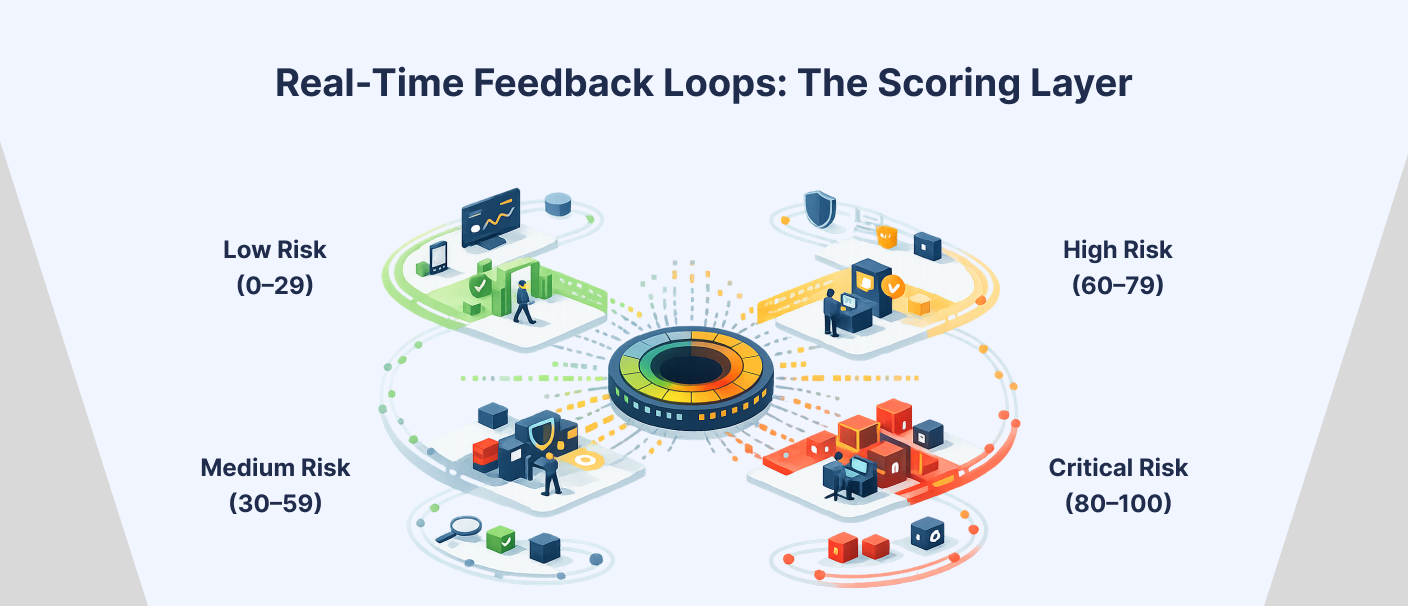
For web applications and SaaS platforms, MVP feature prioritization and the MVP roadmap must address security through a dynamic scoring layer. Static rules are insufficient; real-time risk scoring turns scattered signals into a rolling judgment of system health.
By using the policy engine, which converts the score range (0-100) into action items, the company could develop a “glide” option for secure users and use the precise amount of friction on the attacks. It is an important decision in the context of product feature selection based on products because it sustains conversions.
The 0–100 Scoring Framework
- Low Risk (0–29): Allow and log; zero user friction.
- Medium Risk (30–59): Allow on most routes; gentle verification for sensitive actions.
- High Risk (60–79): Step-up authentication (WebAuthn) and light throttling.
- Critical Risk (80–100): Hard block or manual review for high-value operations.
Case Insights: Precision in MVP Development
- Regional Hospital Network: The health care system in the region used a modular cloud-based application that enhanced clinical processes. In just six months, there was a decrease in documentation time and interruptions for clinicians.
- Marketplace Security: Utilizing real-time risk scoring and device reuse features, a marketplace cut credential-stuffing success by double digits while only “touching” ~2% of users with additional friction.
- Anticipatory Planning: A system used forecasting algorithms to identify patients at greater risk of readmission early enough to prevent additional hospitalization.
The Continuous Feedback Loop: Evolving Through Real-Time Signals
Successful MVP development startups realize that the initial product feature selection is just the beginning, with the actual value being added through the capability of the model to learn from this structure. During the MVP development process, the team that performs well will always make sure to include a feedback mechanism, which will incorporate any verified results like intervention success or chargebacks and even manual appeal decisions to re-train the features and reset their weights. This continuous updating and re-training ensures that the algorithm continues to evolve and prevent the risk of becoming stagnant and unworkable in the future.
Thanks to the use of first-party signals like the session flow and previous conflicts in combination with external reputation feeds, this approach remains grounded and works effectively. One of the most important startup validation approaches, as a result of which the MVP journey will continue in accordance with real user actions and not any assumptions, is to use this approach. In addition, running the system in “shadow mode” for a couple of weeks can help assess the recommendations of the system against the actual results while keeping the same user experience for loyal groups of users.
Technical FAQs
- How do we resolve “interoperability” hurdles in the MVP development process? Interoperability remains “the hard part” because data is often split among systems with different standards. Successful startup MVP planning involves using a modular layer and standards-based APIs to normalize and exchange data, allowing the product MVP to function independently of a single data source.
- Why is “always-on” cloud infrastructure essential for a product MVP? Cloud infrastructure provides the scalability, high availability, and redundancy required for clinical and business environments. It allows the product MVP to always be “on,” evaluating data as it flows in and surfacing outputs for real-time decision-making.
- What role does “real-time risk scoring” play in MVP feature prioritization? Real-time scoring fixes the issue of static rules by turning a stream of signals into an interpretable score. This is a critical feature to prioritize as it calms web app security and sharpens threat detection without wrecking the user experience.
- When should we engage MVP development services for integration? If your team lacks the capacity to harden integrations, automate workflows, or manage the on-call complexity of cloud architecture, professional MVP development services can help connect existing systems smartly.
- How can MVP development startups reduce bias in automated scoring features? In the case of automating systems where one will need to do startup MVP planning, one should always be on the lookout for any proxy to a protected class to avoid violating ethical standards. It is suggested that false positive comparisons be made among different groups and calibrated separately depending on each group. A transparent appeals process is crucial because any form of bias in a product MVP will waste money.
Turning Signals into a Resilient Roadmap
The roadmap to a successful product MVP is not built through the replacement of existing workflows, but through the smart connection of them. By focusing on MVP feature prioritization that emphasizes modularity, real-time feedback, and embedded intelligence, founders can navigate the transition from a research topic into an operational tool.
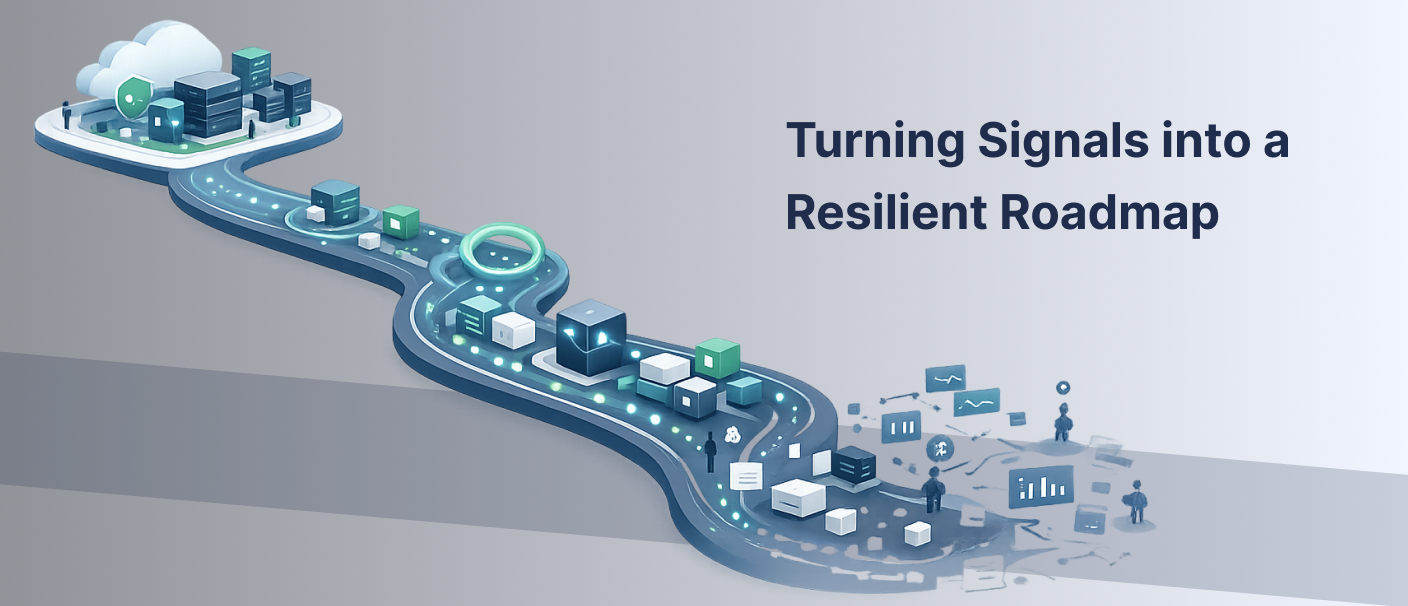
Ultimately, the organizations that thrive are those that recognize that startup MVP planning is a continuous process of updating and re-training based on real-world signals. Collaborating with experts in MVP development services to fortify these basics guarantees that the platform runs on par with the industry, transforming what may have been potential hazards in the process into a robust plan for success.
Do you like to read more educational content? Read our blogs at Cloudastra Technologies or contact us for business enquiry at Cloudastra Contact Us.