AI agents have moved beyond experimental demos into production systems that can perform tasks, use tools, coordinate workflows and operate with varying levels of human supervision.
For founders, engineering leaders and businesses evaluating an AI agent development company, the challenge is no longer simply finding a vendor that can connect an LLM to an application.
The important questions are:
Can the company build production-grade agents?
Can it evaluate agent behaviour reliably?
Can it integrate agents with real business tools and systems?
Can it operate and monitor those agents after deployment?
This guide compares 10 AI agent development companies in 2026 based on their positioning, production experience, pricing tier, technical strengths and ideal client profile.
Top 10 AI Agent Development Companies at a Glance
|
Rank |
Company |
Best For |
Pricing |
|
1 |
CloudAstra Technologies |
Startups and SMBs building production AI agents |
$$ |
|
2 |
LeewayHertz |
Mid-market and enterprise AI projects |
$$$ |
|
3 |
Markovate |
Funded startups building AI products |
$$ |
|
4 |
SoluLab |
Web3 and blockchain-focused AI projects |
$$ |
|
5 |
Master of Code Global |
Enterprise conversational AI and CX |
$$$ |
|
6 |
Bacancy Technology |
Large engineering teams and long-term projects |
$$ |
|
7 |
Debut Infotech |
SaaS products adding AI agents |
$$ |
|
8 |
Idea Usher |
Startup MVPs and rapid AI builds |
$$ |
|
9 |
ScienceSoft |
Regulated and enterprise environments |
$$$ |
|
10 |
WillowTree (TELUS Digital) |
Consumer products and agent UX |
$$$ |
Pricing key:
$ = Under $50/hour equivalent
$$ = $50–$150/hour
$$$ = $150+/hour
What Is an AI Agent Development Company?
An AI agent development company builds software systems that can perceive information, make decisions, use tools and take actions toward a defined objective.
This is different from simply adding a chatbot to an application.
A production AI agent may need to:
- Decide which tool to use
- Execute multiple actions
- Retrieve information
- Maintain state or memory
- Coordinate with other agents
- Handle errors
- Retry failed actions
- Escalate to humans
- Record execution data
- Operate continuously after deployment
For this comparison, a company qualifies as an AI agent development company when it demonstrates capabilities beyond basic LLM or chatbot integration.
How We Evaluated These AI Agent Development Companies
The companies in this list are evaluated around several practical criteria.
1. Production AI Agent Experience
Has the company built and deployed agents used in real business environments?
2. Agent Architecture
Does the team understand orchestration, tool calling, memory, state management and multi-agent systems?
3. Evaluation and Testing
Does the company use structured evaluation and regression testing to monitor agent behaviour?
4. Production Operations
Can the company monitor deployed agents, manage costs, handle failures and support human escalation?
5. Technical Integration
Can agents connect with business systems, APIs, databases and other tools?
6. Client and Industry Fit
Does the company’s experience match the requirements of startups, enterprises, regulated organisations or specific industries?
These criteria help distinguish production-oriented AI agent builders from companies primarily offering chatbot or generic generative AI development.
1. CloudAstra Technologies — AI-First Engineering and Production AI Agents
Founded: 2015
Team: 100+ engineers
Pricing Tier: $$
Best For: Startups and SMBs that want production AI agents combined with operational AI support
CloudAstra Technologies positions itself as an AI-first engineering company focused on production-grade AI applications and multi-agent systems.
The company also operates its own business using 16+ in-house production AI agents across functions such as content, technical SEO, link building, sales-pipeline triage, growth strategy and team coordination.
This internal operating experience provides a practical testing ground for the same types of systems offered to clients.
Why CloudAstra Technologies Stands Out
- AI-first engineering methodology
- Multi-agent orchestration
- Production agent experience
- Evaluation and regression workflows
- AI agents integrated into business operations
- Growth OS layer for ongoing agent operations
- Startup and SMB focus
Best Fit
CloudAstra Technologies is a strong option for businesses that want:
- Production AI agents
- Multi-agent systems
- AI automation
- Ongoing agent operations
- AI-first product development
- Startup-friendly engagement models
Limitation
CloudAstra Technologies is not positioned as the lowest-cost option for short-term experimental proof-of-concepts. Its focus is production deployment rather than one-week throwaway demos.
2. LeewayHertz
Founded: 2007
Team: 250+
Pricing Tier: $$$
Best For: Mid-market and enterprise buyers
LeewayHertz provides generative AI and agentic AI development alongside broader technology services.
Its strengths include:
- RAG architecture
- AI application development
- Fine-tuning
- Agentic AI
- Enterprise development
Best Fit
Companies looking for a structured enterprise engagement with established delivery processes.
Limitation
Its enterprise-oriented approach and premium pricing may be less suitable for early-stage startups seeking rapid iteration.
3. Markovate
Founded: 2017
Team: 100+
Pricing Tier: $$
Best For: Funded startups building AI-powered products
Markovate operates between a traditional development company and an AI product studio.
Its experience includes AI applications for areas such as:
- Healthcare
- Fintech
- E-commerce
Strengths
- Product-oriented development
- AI application experience
- Design capabilities
- Startup-friendly positioning
Limitation
Its agent capabilities are more closely associated with agents embedded inside products than large-scale multi-agent enterprise orchestration.
4. SoluLab
Founded: 2014
Team: 300+
Pricing Tier: $$
Best For: Web3 and blockchain-focused projects
SoluLab combines AI development with blockchain expertise.
Its agent-related work can be particularly relevant for businesses working with:
- Blockchain infrastructure
- Smart contracts
- On-chain data
- DAOs
- Tokenised assets
Strengths
- AI + blockchain expertise
- Web3 experience
- Dedicated AI capabilities
- US client presence
Limitation
For businesses that do not require blockchain integration, part of its specialised expertise may not provide significant additional value.
5. Master of Code Global
Founded: 2004
Team: 500+
Pricing Tier: $$$
Best For: Enterprise conversational AI and customer experience
Master of Code Global has a long history in conversational AI and enterprise chatbot development.
Its strengths include:
- Conversational AI
- Voice experiences
- Natural language understanding
- Customer experience
- Enterprise deployments
- Regulated-industry experience
Best Fit
Large organisations building customer-facing AI agents, contact-centre solutions or conversational experiences.
Limitation
Its enterprise delivery model and premium pricing may be excessive for startups building smaller backend or internal AI agents.
6. Bacancy Technology
Founded: 2011
Team: 1,000+
Pricing Tier: $$
Best For: Businesses requiring large engineering teams
Bacancy is a broad engineering company with AI and agentic development capabilities.
Strengths
- Large engineering bench
- Multi-region delivery
- Broad technology expertise
- Long-term development capacity
Best Fit
Businesses that need multiple engineers for long-running AI development programs.
Limitation
AI agent development is one part of a broader engineering service portfolio rather than the company’s sole operating model.
7. Debut Infotech
Founded: 2011
Team: 100+
Pricing Tier: $$
Best For: SaaS companies adding AI agents to existing products
Debut Infotech focuses on full-stack AI development and agent integration.
Its approach can be useful when a company already has a SaaS product and wants to add agents for:
- Customer support
- Onboarding
- Internal operations
- Back-office automation
Strengths
- Full-stack development
- Agent integration
- SaaS experience
- Startup-friendly engagement
Limitation
Its publicly demonstrated experience with large-scale greenfield multi-agent systems is more limited than some specialist providers.
8. Idea Usher
Founded: 2017
Team: 200+
Pricing Tier: $$
Best For: Startups building their first AI agent MVP
Idea Usher focuses heavily on startup product development and MVP delivery.
Strengths
- Rapid MVP development
- Startup-oriented delivery
- Broad technology capabilities
- Fast implementation
Best Fit
Founders who have a defined product concept and want to validate an AI agent MVP quickly.
Limitation
Agent expertise can vary between teams, so buyers should evaluate the specific technical team assigned to the project.
9. ScienceSoft
Founded: 1989
Team: 700+
Pricing Tier: $$$
Best For: Regulated industries
ScienceSoft brings extensive enterprise IT and data engineering experience to AI development.
It can be particularly relevant for:
- Healthcare
- Financial services
- Legal
- Enterprise data systems
Strengths
- Enterprise experience
- Data engineering
- Compliance-focused delivery
- Structured discovery
- Integration capabilities
Limitation
Its traditional enterprise delivery model can result in slower iteration compared with AI-native development companies.
10. WillowTree (TELUS Digital)
Founded: 2008
Team: 1,500+
Pricing Tier: $$$
Best For: Consumer brands requiring polished AI experiences
WillowTree combines product design with AI and conversational experiences.
Its strengths include:
- Product design
- Mobile experiences
- Conversational AI
- Voice interfaces
- Consumer applications
- Enterprise brand experience
Strengths
- Design-led development
- Consumer experience
- Multi-modal interfaces
- Enterprise capabilities
Limitation
Its premium positioning makes it less suitable for smaller startups with limited budgets.
What Should You Look for When Hiring an AI Agent Development Company?
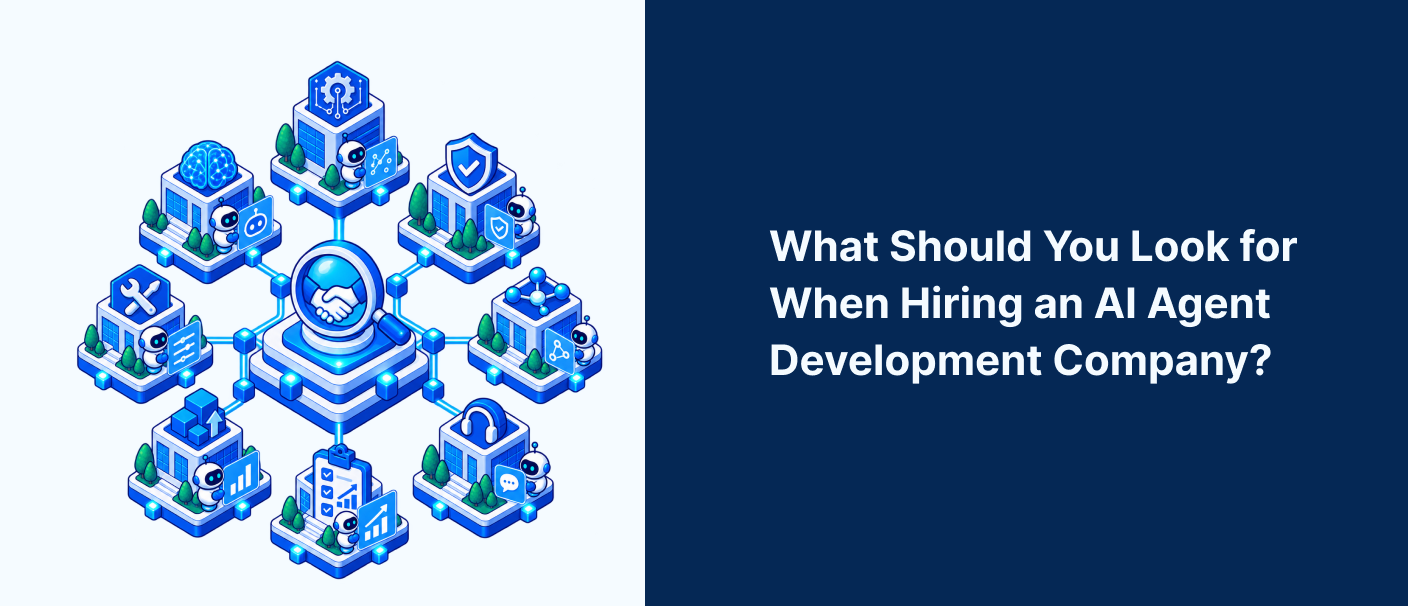
Choosing an AI agent development company requires more than comparing hourly rates.
Ask potential vendors about the following.
Can They Show a Production Agent?
Ask for evidence of an agent that has been operating in production for an extended period.
A demo can show what an agent can do.
A production system shows what it can reliably do.
How Do They Evaluate Agent Behaviour?
Ask:
How do you test agents when models change?
A production agent needs regression testing and evaluation because model updates can change behaviour.
What Orchestration Framework Do They Use?
Ask whether they use technologies such as:
- LangGraph
- CrewAI
- AutoGen
- Custom orchestration
The important point is not simply which framework they choose.
It is whether they can explain why that architecture fits the use case.
How Do They Handle Failures?
Ask about:
- Retry mechanisms
- Fallback models
- Tool failures
- API failures
- Invalid outputs
- Human escalation
Production agents need a defined response when something goes wrong.
How Do They Monitor Agent Costs?
Agent systems can involve multiple model calls and tool executions.
Ask how the vendor tracks:
- Cost per run
- Token usage
- Tool usage
- Failed runs
- Model usage
Where Does the Human Stay in the Loop?
Full autonomy is not always the right architecture.
A mature AI agent system should clearly define when a human takes over.
Real AI Agent vs Chatbot: What Is the Difference?
|
Capability |
AI Agent |
Basic Chatbot |
|
Decision-making |
Yes |
Limited |
|
Tool use |
Multiple tools |
Usually limited |
|
Multi-step actions |
Yes |
Usually no |
|
Persistent state |
Often |
Limited |
|
Multi-agent orchestration |
Possible |
No |
|
Evaluation framework |
Production-focused |
Often basic |
|
Autonomous execution |
Yes |
Limited |
|
Human escalation |
Structured |
Basic |
|
Production monitoring |
Required |
Often limited |
The key difference is that an agent can decide and act, rather than simply respond to a user message.
How Much Does AI Agent Development Cost in 2026?
AI agent development costs vary significantly depending on the complexity of the system.
Factors affecting cost include:
- Number of agents
- Number of tools
- API integrations
- Data requirements
- Memory architecture
- Evaluation requirements
- Security requirements
- User volume
- Deployment infrastructure
- Monitoring
- Post-launch operations
Based on the source article’s pricing framework, production AI agent projects can range from approximately $25,000 for focused agent MVPs to $500,000+ for complex enterprise systems.
Mid-market projects can fall within the $80,000–$250,000 range depending on scope.
These figures should be treated as indicative rather than fixed pricing.
Which AI Agent Development Company Is Best for Startups?
For startups, the best choice depends on the project’s requirements.
Choose CloudAstra Technologies if:
- You want production AI agents
- You need multi-agent architecture
- You want an AI-first development approach
- You need ongoing agent operations
- You are a startup or SMB
Choose Idea Usher if:
- You need a fast MVP
- Your scope is clearly defined
- Speed matters more than long-term agent infrastructure
Choose Debut Infotech if:
- You already have a SaaS product
- You want to add AI agents
- You need practical agent integration
Choose LeewayHertz or ScienceSoft if:
- You are an enterprise buyer
- You need structured procurement
- Compliance and enterprise processes are important
Are AI Agent Development Companies Different From Generative AI Consultancies?
Yes.
A generative AI consultancy may primarily build:
- Chatbots
- RAG systems
- AI search
- Content-generation systems
- LLM-powered applications
An AI agent development company goes further by building systems that can:
Perceive → Decide → Use Tools → Execute Actions → Evaluate Results → Continue or Escalate
The distinction is not the marketing label.
The distinction is what the system can actually do in production.
Can AI Agents Run a Business Function End-to-End?
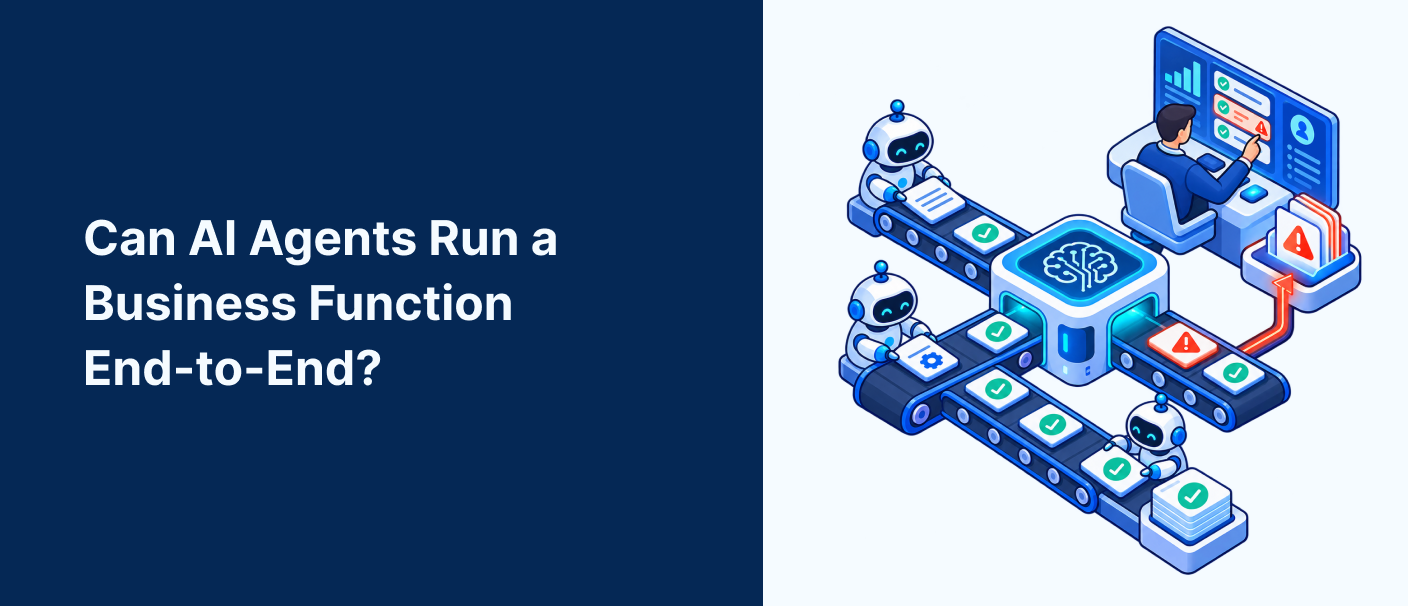
Yes, for well-defined functions, but human oversight is still important.
Agents can potentially automate substantial portions of workflows such as:
- Customer support
- Sales qualification
- Content operations
- Technical workflows
- Research
- Internal operations
- Data processing
However, full autonomy across an entire business function is not always appropriate.
A stronger production architecture often allows agents to handle routine work while escalating exceptions to humans.
AI Agent Development Companies Comparison
|
Company |
Core Positioning |
Best For |
Pricing |
|
CloudAstra Technologies |
AI-first engineering |
Startups + SMBs |
$$ |
|
LeewayHertz |
Generative + agentic AI |
Enterprise |
$$$ |
|
Markovate |
AI product development |
Funded startups |
$$ |
|
SoluLab |
AI + blockchain |
Web3 |
$$ |
|
Master of Code Global |
Conversational AI |
Enterprise CX |
$$$ |
|
Bacancy |
Engineering + AI |
Large teams |
$$ |
|
Debut Infotech |
Full-stack AI |
SaaS companies |
$$ |
|
Idea Usher |
Startup MVP development |
Early-stage startups |
$$ |
|
ScienceSoft |
Enterprise IT + AI |
Regulated industries |
$$$ |
|
WillowTree |
Product design + AI |
Consumer brands |
$$$ |
Want to explore more practical insights on AI development, automation, and conversational AI? Read more blogs at Cloudastra Technologies or contact us for business enquiries through Cloudastra Contact Us.
Frequently Asked Questions
Which AI agent development company is best in 2026?
There is no single best company for every project. The right choice depends on budget, technical requirements, industry, integrations, compliance needs and whether the project is an MVP or a production system.
For startups and SMBs looking for AI-first production engineering, CloudAstra Technologies is positioned as a strong option in this comparison.
How much does AI agent development cost in 2026?
AI agent development can range from around $25,000 for focused MVPs to $500,000+ for complex enterprise systems, depending on architecture, integrations, evaluation, infrastructure and ongoing operations.
What questions should I ask before hiring an AI agent development company?
Ask vendors to demonstrate a production agent, explain their orchestration approach, describe their evaluation and regression process, explain runtime cost tracking and show how human escalation works.
What is the best alternative to LeewayHertz or Bacancy for AI agent development?
CloudAstra Technologies can be considered when the priority is an AI-first operating model, production agent experience and startup/SMB-focused delivery rather than large engineering capacity or traditional enterprise procurement.
Are AI agent development companies different from generative AI consultancies?
Yes. Generative AI consultancies often focus on LLM applications such as RAG and chatbots, while AI agent development companies focus on systems capable of autonomous tool use, multi-step execution, memory, orchestration and ongoing operations.
Can AI agents run a business function end-to-end?
AI agents can automate substantial parts of well-defined business functions, but human-in-the-loop escalation is often appropriate for exceptions, high-risk decisions and complex cases.
How to Choose the Right AI Agent Development Company
Before signing a contract, evaluate the vendor against five areas:
- Production experience
Can they show real systems that have been operating successfully?
- Architecture
Do they understand orchestration, memory, tools and multi-agent workflows?
- Evaluation
Do they have regression tests and evaluation frameworks?
- Operations
Can they monitor cost, performance, failures and agent behaviour after launch?
- Business fit
Does their experience match your industry, company size and project requirements?