As we move into 2026 in our fast-paced environment, the limitation on engineering productivity is not the rate at which we can write the code but rather the resistance to deploying it. In many cases, the traditional process of deploying code manually has been a major “bottleneck,” viewing software deployment as a separate activity rather than a built-in function. Modern DevOps automation services are now essential for reducing deployment friction, improving release consistency, and enabling engineering teams to scale efficiently. Where the old process was made to be stable in-house, it tends to be too rigid in today’s world of dynamic IPs and botnets evolving within sessions.
Successful DevOps automation services distinguish themselves by moving away from “bolted-on” scripts and toward a model where the DevOps pipeline participates in decision-making as work happens. When a team relies on manual intervention, they are essentially chasing yesterday’s updates with today’s customers, increasing cognitive load and technical debt.
The Hidden Costs of Manual Friction in 2026
Such large-scale and well-integrated systems pose high risks when manually experimenting with them. In itself, the “documentation overhead,” where developers take too much time to analyze logs and fill in forms, represents a significant waste of resources.
To overcome these DevOps automation and DevOps automation services hurdles, elite teams leverage CI CD automation to turn static repositories into living workflows. This transition reduces the “time to truth” by evaluating data simultaneously as it flows into the system, rather than analyzing logs after the fact. By embedding intelligence directly into the engineering workflow, DevOps automation services allow for continuous evaluation and decision support without interrupting the developer’s flow.

Strategic Benchmarks for Automated Velocity
The following indicators represent industry signals for evaluating the impact of DevOps practices on organizational performance in 2026:
|
Indicator |
Approximate Trend |
Strategic Impact |
|
Cloud Platform Adoption |
~70% |
Infrastructure as a scalable enabler. |
|
Lead Time for Changes |
20–40% Reduction |
Faster “time to truth” for new features. |
|
Change Failure Rate |
10–25% Lift in Accuracy |
Sharpens threat detection and reliability. |
|
Annual Growth of Automated Solutions |
>25% |
Market demand for embedded capabilities. |
Infrastructure as the Enabler of Resilience
It is common to overlook the role of infrastructure in the delivery cycle, yet the success of DevOps automation and DevOps automation services depends heavily on cloud architecture to function at scale. For a modern DevOps team, infrastructure becomes less about managing servers and more about reliability, security, and performance.
Leveraging DevOps consulting and managed cloud services allows organizations to utilize elastic computing resources, scaling workloads up or down without investing in fixed, stagnant hardware. Avoiding common DevOps anti patterns such as manual scaling, isolated deployment workflows, and inconsistent infrastructure management is essential for maintaining operational efficiency. This cloud-based foundation supports the high availability and redundancy necessary in mission-critical environments, ensuring the DevOps pipeline remains “always on.”.
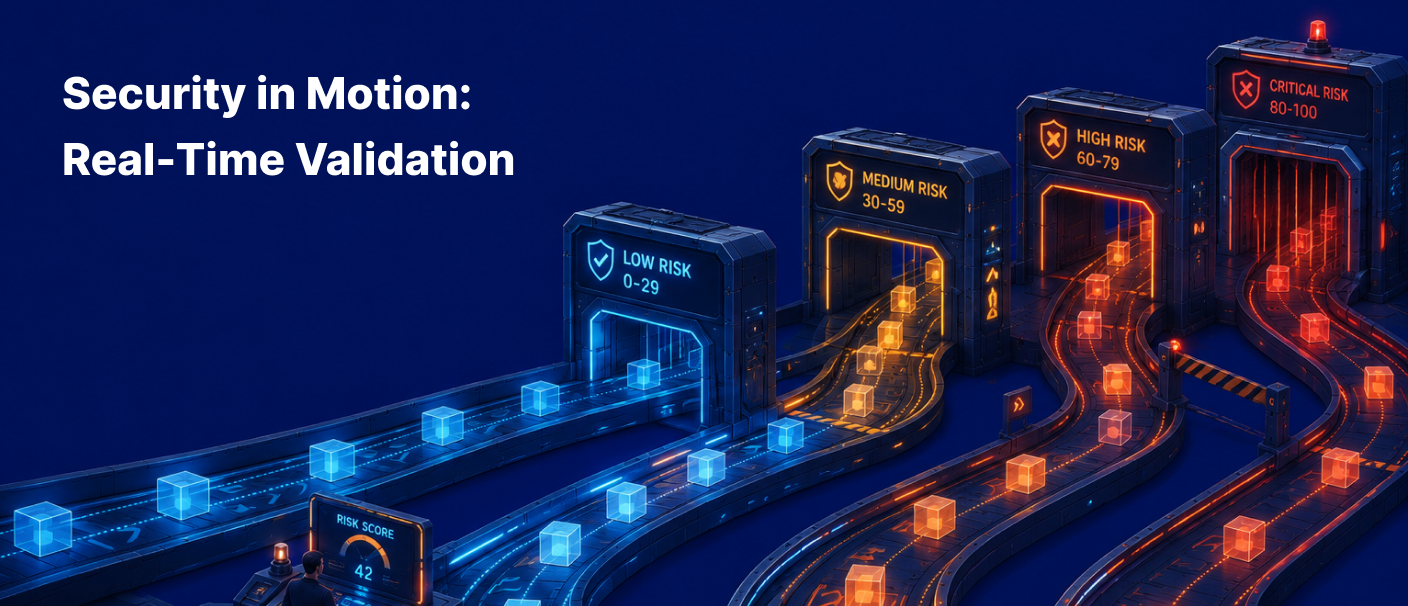
Security in Motion: Real-Time Validation
In 2026, CI CD automation must address security through a dynamic scoring layer. It is no longer adequate to apply fixed rules; rather, effective groups use real-time risk scoring that consolidates disparate pieces of information into an assessment of system well-being.
By using a policy engine that maps score bands (typically 0–100) to automated actions, DevOps managed services can provide a “glide” experience for trusted code while applying precise friction to risky merges. This architectural decision sustains conversion and trust from day one.
The Automated Policy Engine
- Low Risk (0–29): Allow and log; zero user or developer friction.
- Medium Risk (30–59): Allow on most routes; gentle verification for sensitive actions.
- High Risk (60–79): Step-up authentication (WebAuthn/OTP) and light throttling.
- Critical Risk (80–100): Hard block or manual review for high-value operations.
Case Insights: Automation in Practice
- Regional Network Efficiency: A health network region which faced delayed documentation after migration employed cloud-based technology and DevOps automation to ensure smooth clinical workflows. In just six months, documentation was completed faster and disruptions for clinicians reduced.
- Real-Time Threat Detection: A marketplace application deployed real-time risk scores and device reuse technology which helped reduce the effectiveness of credential stuffing attacks by more than 10%, even though they were interacting with less than 2% of their users.
- Marketplace Security: A retail website operating online utilized the techniques of cross-card device usage and IP age for spotting potential attack patterns before they occurred, thus bringing down the expected number of chargebacks.
The Continuous Feedback Loop: Observability and Calibration
In order for a well-performing DevOps team to automate itself, it needs to go through a repetitive process. The most important element of the DevOps practices is that the feedback loop be set up. The feedback will then enable the retraining of the features and updating of the weights through the verified results of the system. Without this mechanism, automated models and scripts risk becoming “brittle” and outdated, unable to adapt to the evolving operational landscape of 2026.
For the DevOps automation services to be successful, one needs to focus on deep observability. The team should ensure there is an active dashboard providing information like scoring latency (median/p95), decision mix, and the false-positive rate on loyal cohorts. With the implementation of new automated workflow “shadowed,” the engineer will analyze the decisions made by the system and compare them with reality.
This calibration ensures that the DevOps pipeline maintains a high level of accuracy and that the 0–100 risk bands remain stable over time. Ultimately, utilizing professional DevOps managed services to oversee this continuous re-training ensures that your infrastructure focus remains on reliability and performance rather than managing the technical debt of stagnant automation.
Technical FAQs
- How do DevOps automation services solve the “interoperability” hurdle? The problem of interoperability is still significant since data is usually distributed in various systems that do not necessarily use the same standards. Good DevOps practices implies the implementation of a modular layer and standard-based APIs, which would help normalize and transfer data irrespective of where it is stored.
- Why is “always-on” infrastructure critical for modern DevOps? Cloud infrastructure provides the scalability, high availability, and redundancy required for complex clinical and business environments. It allows the automated systems to be “always on,” evaluating data as it flows in and surfacing outputs for real-time decision-making.
- What role does “real-time risk scoring” play in a DevOps pipeline? It fixes the issue of static rules by turning a stream of signals into an interpretable score. This is a critical feature to prioritize as it calms web app security and sharpens threat detection without wrecking the user experience.
- When should we engage DevOps consulting and managed cloud services for integration? If your team lacks the capacity to harden integrations, automate workflows, or manage the on-call complexity of cloud architecture, professional DevOps managed services can help connect existing systems smartly.
- How does a DevOps team maintain a safe rollback strategy for automated pipelines? A resilient DevOps pipeline, both speed and safety must be a priority. Safety can be ensured by pinning each automated model and rule, thereby making sure that a “last known good” version is always available for fast deployment. Moreover, using route-based kill switches like those used in login and password reset processes will enable the team to rollback only parts of automation in case of latency and lack of accuracy.
Turning Signals into a Resilient Roadmap
It is clear that success in the coming years will be reserved for those organizations that incorporate intelligence into their process of work. The best way to avoid such pitfalls is through a change in attitude where delivery is no longer seen as an activity but rather incorporated into the process.
Through the use of DevOps automation services that consider modularity and immediacy in their approach, your team will be able to handle the challenges related to interoperability and manual deployment at the same time. Utilizing DevOps managed services and DevOps consulting and managed cloud services to strengthen your integrations means that your platform will have everything it needs to be competitive and match the pace of the industry. This approach towards CI CD automation is what makes an issue a potential risk turn into a winning strategy.

Do you like to read more educational content? Read our blogs at Cloudastra Technologies or contact us for business enquiry at Cloudastra Contact Us.