For many organizations, the completion of a digital transition feels like the end of a long journey. However, professional cloud migration consulting often reveals that the “Go-Live” date is merely the starting line for a new operational era. For many teams in 2026, the problem isn’t migrating, but coping with the cloud operational complexity created after migration to the cloud. Indeed, while the cloud environment enables the processing of data in almost real time, it requires changes on a very fundamental level of daily operations.
In the past, technology was designed for stability in a physical space, which led to data silos and lagging upgrades. Once the move is done, many challenges can emerge in relation to cloud migrations due to the adoption of old “on-prem” methods. Without the right cloud migration consulting and cloud computing essentials unlock benefits, organizations may struggle to realize that cloud infrastructure is an enabler of reliability and performance, rather than just a place to store servers.
Navigating Cloud Operational Complexity and Data Interoperability
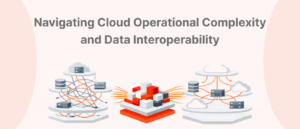
One of the most persistent cloud migration issues is the realization that moving to the cloud does not automatically fix fragmented data. Data often remains split among systems developed over time with different standards. Managing this cloud operational complexity requires a shift from creating new systems to smartly connecting existing ones through a modular layer.
The Role of APIs in Streamlining Operations
In order to guarantee that cloud computing basics help derive advantages such as data centralization and development of integration standards, the effective team uses Application Program Interface (API) technology to standardize and verify data. The modular nature of this approach helps introduce the system gradually, thereby minimizing risks associated with the project. Using cloud computing services will help ensure that the same level of integration standards is achieved in all locations.
Reference Metrics for Cloud Efficiency
|
Indicator |
Approximate Trend |
Strategic Requirement |
|
Healthcare Orgs Using Cloud Platforms |
~70% |
High-scale, centralized infrastructure |
|
Documentation Time Reduction |
20–40% |
Automated clinical AI workflows |
|
Annual Growth of AI Solutions |
>25% |
Scalable and elastic computing |
|
System Availability |
High Redundancy |
Redundant cloud-based architecture |
Mitigating Cloud Security Risks Through Real-Time Governance
The combination of cloud computing and artificial intelligence raises several fundamental concerns related to data privacy and accountability. The threats faced by cloud computing security in 2026 will be very unpredictable; a system that uses a set of static rules and evaluates them only once per day becomes insufficient when dealing with rapidly evolving botnets during sessions.
Effective cloud migration consulting emphasizes that security must be “baked in” from the start. By using cloud computing managed services and cloud computing essentials unlock benefits, teams can deploy adaptive controls that add just-enough friction to high-risk cohorts while allowing trusted users to glide through the system. When these foundations are stable, organizations can focus on delivering intelligence instead of constantly managing security constraints. Addressing these cloud security risks head-on is the only way to ensure that users maintain trust in the system.
Continuous Cloud Optimization Needs and Scalability
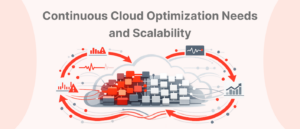
Even post success, the cloud optimization needs remains a continuous process on the technology roadmap. Cloud services enable enterprises to expand or contract their workload without purchasing hardware. However, the elastic nature of cloud systems necessitates proper management, and lack of constant monitoring leads to expensive mistakes.
It is necessary to emphasize that in order to make use of advantages like reliability and redundancy offered by essential concepts within cloud computing, one should focus on training of models and analytics processing in population data sets. High-performance capabilities can be delivered via managed services in the area of cloud computing. They require the use of experts capable of providing proper security for the infrastructure.
The Governance of Adaptive Systems
Apart from the technological issues, cloud migration consulting also stresses the importance of ensuring that there is a strong emphasis on governance, data privacy, and model explainability. Considering the inherent complexity associated with functioning in the cloud domain, the need for incorporating detailed audit trails and explainable mechanisms becomes vital to uphold ethical and legal considerations. To counter the persistent security threats posed by the cloud environment, it is important to develop an iterative feedback system, where the verified results – including multifactor authentication, appeal process, and chargeback – are fed back into the system to train features and update their weightings. The resolution of cloud migration consulting optimization problems through cloud computing management services involves updating and training internal models based on new data to avoid staleness and brittleness.
Case Snapshots: From Strategy to Real-World Impact
- Regional Network Efficiency:
The health region that faced issues related to delayed documentation after migration implemented cloud computing architecture to improve clinical process stability. In less than six months, the problem of documentation lag was reduced.
- Real-Time Threat Detection:
A marketplace application utilized real-time risk scoring to mitigate cloud security risks. By applying step-up authentication to only ~2% of users, they cut credential-stuffing success by double digits without increasing help-desk tickets.
- Administrative Resource Planning:
The use of forecasting algorithms available through cloud computing helped hospitals predict patient inflow based on past trends, enabling them to prepare proactively rather than reactively.
Technical FAQs
1. How do we resolve persistent cloud migration issues like data silos?
Successful systems normally employ a modular layer for integration, using standard APIs for normalizing, validating, and exchanging data. This provides flexibility by allowing models and tools to operate independent of a single source of data.
2. Why is cloud migration consulting necessary for post-migration security?
The environment needs to be set up from scratch to use encryption, access control, and monitoring. This is done by professional consultants to make sure that the cloud environment is safe through dynamic risk assessment.
3. What specific cloud optimization needs should we monitor for performance?
Teams should track scoring latency (median/p95), feature compute time, and decision cache hit-rates. Monitoring these ensures that the infrastructure remains an enabler of performance rather than a constraint.
4. How do cloud computing managed services support interoperability?
These services implement frameworks such as HL7 FHIR and standards-based APIs intended to work alongside existing EHR and legacy systems. This is critical for managing cloud operational complexity in large, fragmented organizations.
Engineering for Long-Term Success

In the final analysis, moving to the cloud is an operational shift, not a one-time project. Success for organizations lies in understanding the potential of cloud computing fundamentals in delivering advantages such as scalability, interoperability, and real-time intelligence. The complexity of operations in the cloud and cloud security issues can be addressed by optimizing and integrating modules continuously.
By partnering with professional cloud migration consulting and leveraging cloud computing managed services and cloud computing essentials unlock benefits, organizations can ensure their infrastructure moves at the same speed as the industry itself. Addressing ongoing cloud migration issues through a focus on reliability and performance is the only way to turn scattered data into a steady, successful decision-making engine.
In the end, what will make you successful in the cloud is to think of the environment as an embedded function that enhances whatever you do. Once you find solutions to your optimization problems in the cloud with technological precision, then you will turn your system into a living process. This strategic approach ensures that every request, every session, and every deployment is backed by a steady and informed decision.
Do you like to read more educational content? Read our blogs at Cloudastra Technologies or contact us for business enquiry at Cloudastra Contact Us.