The world of 2026 has made it imperative for businesses to see software delivery as an ecosystem rather than a linear process. In today’s world, with CI CD pipelines there is a paradox when using continuous integration/continuous deployment pipelines; although the aim is speed, what most businesses experience is a string of brittle silos. Achieving true DevOps efficiency and CI/CD pipeline security requires moving beyond treating the pipeline as a standalone project and instead embedding intelligence directly into the engineering workflow.
When CI/CD pipeline security and CI CD best practices is bolted on as an afterthought, it creates a “documentation burden” that slows down developers and increases mental load. To thrive, teams must treat their delivery infrastructure as a living workflow that participates in decision-making as work happens.
Fix 1: Implement Modular Integration Layers
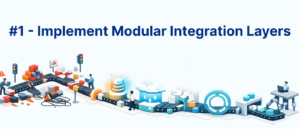
One of the most persistent obstacles in DevOps pipeline optimization and DevOps CI CD is the fragmentation of data across disparate tools. To resolve this, successful teams utilize a modular layer to perform integration. As APIs help in normalizing and validating the data, CI CD pipelines following CI CD best practices are not reliant on any one source of data, thereby functioning as an independent mechanism. This technique intelligently leverages available solutions instead of recreating the whole wheel, thus reducing risks and promoting gradual implementation.
Fix 2: Deploy Real-Time Risk Scoring for Commits
Static security policies that trigger just once a day are not adequate to ensure the security of CI/CD pipeline security today. Rather, teams must adopt real-time risk assessment, which translates the flow of data like IP freshness, device identifier, and developer’s actions into an ongoing evaluation. This dynamic risk assessment will evolve with changes in the environment and ensure that any potential hazardous code merge is detected, while non-hazardous code will pass through.
Fix 3: Utilize Elastic Cloud Computing
Training models on population-level data sets involves large computing requirements. Leveraging DevOps consulting and managed cloud services allows organizations to scale workloads up or down without investing in fixed, stagnant hardware. This cloud-based foundation ensures high availability and redundancy, which are necessary in rigorous production environments.
|
Indicator |
Approximate 2026 Trend |
Strategic Impact |
|
Cloud-Native Adoption |
~70% of Orgs |
Enables centralized data access and scale. |
|
Pipeline Latency (p95) |
< 200ms Target |
Prevents “fire drills” and maintains velocity. |
|
Documentation Automation |
20–40% Time Reduction |
Reduces manual effort and human error. |
|
Security Lift |
10–25% Accuracy Increase |
Sharpens threat detection without adding bloat. |
Fix 4: Automate Documentation through NLP
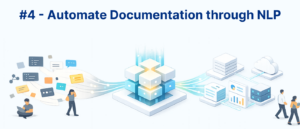
Manual documentation is a source of massive inefficiency. By integrating natural language processing (NLP), DevOps CI CD environments can automatically pull structured data from unstructured commit notes. This not only reduces the “documentation burden” for engineers but also ensures that changes are pushed across all locations consistently, eliminating the need for manual change at each individual site.
Fix 5: Apply Adaptive Friction to Merges
Friction has a direct cost to DevOps efficiency and DevOps pipeline optimization. Instead of hard-blocking all requests, use a policy engine to map risk score bands to actions. For example:
- Low Risk (0–29): Allow and log.
- Medium Risk (30–59): Show gentle verification for sensitive actions.
- High Risk (60–79): Require step-up authentication (WebAuthn/OTP).
- Critical Risk (80–100): Hard block and require manual review.
Fix 6: Establish Feedback Loops and Observability
A pipeline without a feedback loop is already out of date. Successful DevOps CI CD and DevOps pipeline optimization requires dashboards for latency (p50/p95), decision mix, and false positives. When confirmed issues or successful deployments flow back into the system, they retrain the features and refresh the weights of your automated logic.
Fix 7: Partner with DevOps Managed Services
Managing CI/CD pipeline security and operational complexity is often a source of mental load that detracts from core development. Engaging with DevOps consulting and managed cloud services can harden your integration and on-call automation. These partners help manage “the hard part” of interoperability, ensuring that your infrastructure focus remains on reliability and performance rather than managing technical constraints.
The Role of Governance and Automated Trust in CI/CD
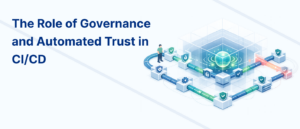
However, any sound approach to CI/CD pipeline security cannot neglect governance issues. In line with this, more complex DevOps CI CD systems generate serious doubts about data confidentiality, transparency, and accountability. In order to sustain adoption and gain internal support, effective DevOps teams start adding to their CI CD pipeline audit logs and capabilities for explainability, meeting ethical and legal compliance requirements.
Equally important is to ensure technical dependability; top-notch enterprises rely on DevOps consulting and cloud computing services that help to embed encryption and access management controls from the outset without having to deal with retroactive changes to CI CD processes.
Another way to optimize DevOps pipelines by adjusting thresholds for newly introduced security mechanisms is by implementing a “shadow mode,” i.e., running them during 2-3 weeks, and comparing proposed solutions with actual events. It is possible to balance technical risks and DevOps effectiveness by following CI CD best practices, including version pinning, which means always having “last known good” CI CD configuration available in case a rollback is needed to meet the pace of the industry.
Case Snapshots: Efficiency in Action
- Regional Network Optimization:
- Transition problems led to using cloud applications by a regional network that helped with better efficiency in clinical practices, reducing documentation time and interruptions in just six months.
- Detection of Marketplace Threats:
- Risk scoring helped a marketplace reduce credential stuffing success rates by ten points or more while interacting with fewer than 2% of users.
- Automated Risk Assessment for E-commerce:
- With the help of device and IP signals, a certain e-commerce organization detected risk patterns, leading to a decrease in chargebacks.
Technical FAQs
1. How does interoperability impact DevOps efficiency?
The concept of interoperability is all about integrating systems intelligently without creating new silos. Through modular layers and APIs that make the data standardizable, one can share information between disparate systems without any manual effort.
2. Why is “always on” infrastructure critical for CI CD pipelines?
Cloud-based infrastructure allows the system to be “always on,” evaluating new data as it flows in and surfacing outputs for real-time decision-making. This reduces the friction associated with implementation and increases adoption.
3. What role does risk scoring play in CI/CD pipeline security?
It replaces static rules with dynamic risk assessment. This ensures that your security posture meets or exceeds traditional on-premise systems while maintaining the speed of modern web apps.
4. When should we lean on DevOps consulting and managed cloud services?
If your team is experiencing “documentation delays” or high “mental load” due to incomplete records and brittle systems, external experts can help harden your automation and interoperability frameworks.
The Roadmap to Resilient Pipelines

Ultimately, the organizations that thrive as data volume expands are those that embed intelligence directly into how they accomplish their work. By resolving CI/CD pipeline security through real-time scoring and utilizing modular layers to overcome interoperability barriers, you can turn a slow, reactive process into a living, adaptive workflow.
Leveraging DevOps consulting and managed cloud services provides the systems necessary to operate at the same speed as the industry itself. The dedication to CI CD best practices will ensure that each release is made on the basis of a well-thought-out decision, thus ensuring that DevOps efficiency becomes a tangible reality rather than just an idealized goal. For startups to keep up, they need to see their CI CD pipelines as more than just an “extra.”
A process that used to be riddled with errors is now highly accurate, but only if you give priority to infrastructure related to reliability, security, and performance. This list of seven tested solutions will help keep your pipeline competitive, not a bottleneck for your growth.
Do you like to read more educational content? Read our blogs at Cloudastra Technologies or contact us for business enquiry at Cloudastra Contact Us.